Jellyfish 3D SVG Multilayer Paper Files: A Designer’s Practical Take
As a professional graphic designer who regularly works with branding, packaging, and print-on-demand projects, I'm always on the lookout for design assets that can elevate a concept from good to exceptional. The Jellyfish 3D SVG Multilayer Paper Files caught my eye as a unique visual offering with layered depth and a whimsical aesthetic. In this review, I’ll walk through how this creative asset performed in real-world applications, what it brings to the table, and where it might not be the best fit.
First Impressions: Delicate Depth and Visual Wonder
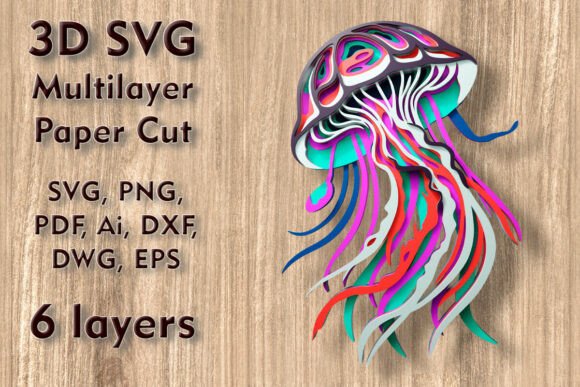
The first thing that stands out about the Jellyfish 3D SVG Multilayer Paper Files is its three-dimensional feel. It's not just an SVG — it's a multilayered paper-cut design that mimics the texture and intricacy of physical art. This gives it a handcrafted charm that feels right at home in modern design contexts like handmade businesses, boutique product lines, or even seasonal campaigns aimed at evoking a sense of wonder or playfulness.
Visually, the jellyfish illustration is soft yet detailed. The use of negative space and overlapping layers creates a sense of movement and depth, which makes it ideal for supporting brand elements that want to stand out without overwhelming the viewer. Its style is somewhere between illustration and clipart, but with enough sophistication to avoid looking too amateurish when placed in a polished layout.
Real-World Use in Branding and Creative Projects
I tested this asset in several scenarios relevant to client work. Here’s how it performed across different design directions:
- Logo Design: While the jellyfish isn’t a logo itself, it can act as a supporting element in a brand identity system. For instance, if a small business wants to incorporate marine life into their theme, this could serve as a subtle emblem or watermark.
- Product Mockups: When added to a printable wall art mockup or shadow box layout, the jellyfish design brought a fresh, tactile dimension. The layered SVG format allowed me to simulate realistic stacking and depth in digital renders.
- Packaging Design: Used as a decorative accent on a gift box or tag, the jellyfish added a touch of elegance and uniqueness. It worked especially well with matte finishes and natural textures.
- Social Media Graphics: On Pinterest pins and Instagram posts, the jellyfish illustration helped create a mood of curiosity and creativity. The file size (9.85 H x 7.09 W in / 250 x 180 mm) is generous enough to maintain clarity even at larger scales.
- Cricut Projects: As a Cricut user myself, I was pleased with how cleanly the design cut. The layers are defined and easy to separate, making it perfect for DIY kits or custom Etsy products like greeting cards or wall art.
- Merchandise & Print-on-Demand: When applied to tote bags, mugs, and stickers, the jellyfish design felt cohesive and visually appealing. Its stylized form translates well to fabric and ceramics, though I’d recommend using it sparingly to avoid cluttering the surface.
Where This Asset Shines Brightest
The Jellyfish 3D SVG Multilayer Paper Files excels in environments where large layout areas and hero graphics are needed. Think of it as a versatile component for editorial spreads, blog headers, or even as part of a themed collection for a creative marketplace listing.
- Printable Wall Art: The scale and layering make it ideal for creating dimensional prints. Whether you're designing for a local event or a home decor line, this asset adds character without being overly busy.
- Themed Campaigns: If your project centers around oceanic themes, eco-conscious messaging, or anything with a dreamy vibe, this jellyfish illustration fits perfectly. It enhances emotional appeal and supports storytelling through visuals.
- Canva Templates: I integrated it into a few Canva templates for social media banners and found it enhanced the overall look without requiring complex edits. Its layered structure allows for customization while maintaining visual integrity.
When to Approach with Caution
While this design asset has many strengths, there are certain contexts where it may not perform as well. As a designer, it’s important to know when to say no — or at least adjust expectations.
- Small Sizes: The intricate details become less readable when scaled down. Avoid using it in tiny formats like icons or micrographics unless you simplify the layers yourself.
- Crowded Layouts: In layouts with dense text or multiple visual elements, the jellyfish can get lost or distract from the primary message. It's better suited as a focal point rather than background noise.
- Low-Contrast Backgrounds: I noticed that when placed against light gradients or pastel tones, the design sometimes lacked pop. Always test it on both light and dark backgrounds to ensure visibility.
- Minimalist Branding: This asset leans more towards illustrative and decorative styles. If your client prefers clean, sans-serif typography and minimal visuals, it might clash with the intended brand voice.
- Corporate Materials: The whimsical nature of the jellyfish doesn't align well with formal presentations, reports, or whitepapers. However, it can work beautifully in internal creative materials or employee appreciation items.
Readability, Hierarchy, and Emotional Impact
In terms of visual hierarchy, the jellyfish illustration functions best as a secondary element. It doesn’t compete with typography when used appropriately but instead complements it by adding warmth and visual interest. That said, its readability depends heavily on placement and contrast.
For brand consistency, I recommend pairing it with fonts that balance its organic curves. I tested it with a serif font and a sans serif typeface, and the former gave it a more refined, elegant look. A script or handwritten font would enhance the handmade aesthetic, while a display font might overpower the delicate design.
Emotionally, the jellyfish conveys tranquility and fluidity. It's great for brands targeting mindfulness, wellness, or nature-inspired audiences. The emotional appeal is strong, but the visual trust comes into play when ensuring it maintains quality across all platforms and outputs.
Design Notes for Commercial Use
Before using the Jellyfish 3D SVG Multilayer Paper Files in any commercial project, here are some practical checks I made:
- Test in Black and White: The color palette is soft and muted, so I converted the design to grayscale to see how it holds up. It retained much of its visual interest, though some fine details were slightly harder to distinguish.
- Preview at Small and Large Sizes: At large sizes, the design looked stunning. But when reduced below 100px, the thin elements began to lose clarity. This is something to consider if planning for miniatures or high-density layouts.
- Check File Formats: The asset includes both SVG and PNG versions. The SVG is fully editable in vector software, which is a huge plus for customizing colors or adjusting layers. The PNG files have transparency, so they integrate smoothly into most digital designs.
- Review Commercial Licensing: Make sure the asset includes a valid commercial license before using it in client work or selling it as part of an Etsy product or print-on-demand item. Licensing issues can derail a project quickly, so double-check everything upfront.
- Test Print Quality: I printed the design at full scale and was impressed with the crispness of the lines. However, scaling beyond the original dimensions required careful adjustment to preserve proportions and detail.
Use Cases and Project Fit
This asset is particularly useful for:
- Creating handmade-style wall art for boutique shops or interior design clients
- Enhancing seasonal campaigns with a gentle, thematic touch
- Adding a unique flair to product labels or packaging accents
- Supporting creative marketplaces like Etsy with downloadable or customizable items
- Boosting social media engagement through visual storytelling and branded content
It also serves well as part of a design bundle for small business owners launching a new line of merchandise or branding collateral. The 3D aspect makes it feel premium, while the paper-cut style keeps it approachable and artisanal.
Final Thoughts for Designers and Marketers
Overall, the Jellyfish 3D SVG Multilayer Paper Files is a solid addition to any designer’s toolkit. It brings a sense of movement and life to otherwise flat surfaces, and its adaptability across print and digital mediums is a big win.
However, like any design asset, it needs to be used thoughtfully. It’s not a one-size-fits-all solution — but when the right project calls for a touch of whimsy, elegance, or oceanic inspiration, this jellyfish illustration delivers. Just remember to check commercial licensing, preview in context, and respect its limitations in smaller formats or minimalist settings.
If you're working on a creative product line, a themed campaign, or anything that benefits from layered illustrations, this asset is worth considering. It’s a rare find that balances artistic value with practical usability — and that’s exactly what professionals need in today’s fast-paced design world.